Impact I Had on This Project:
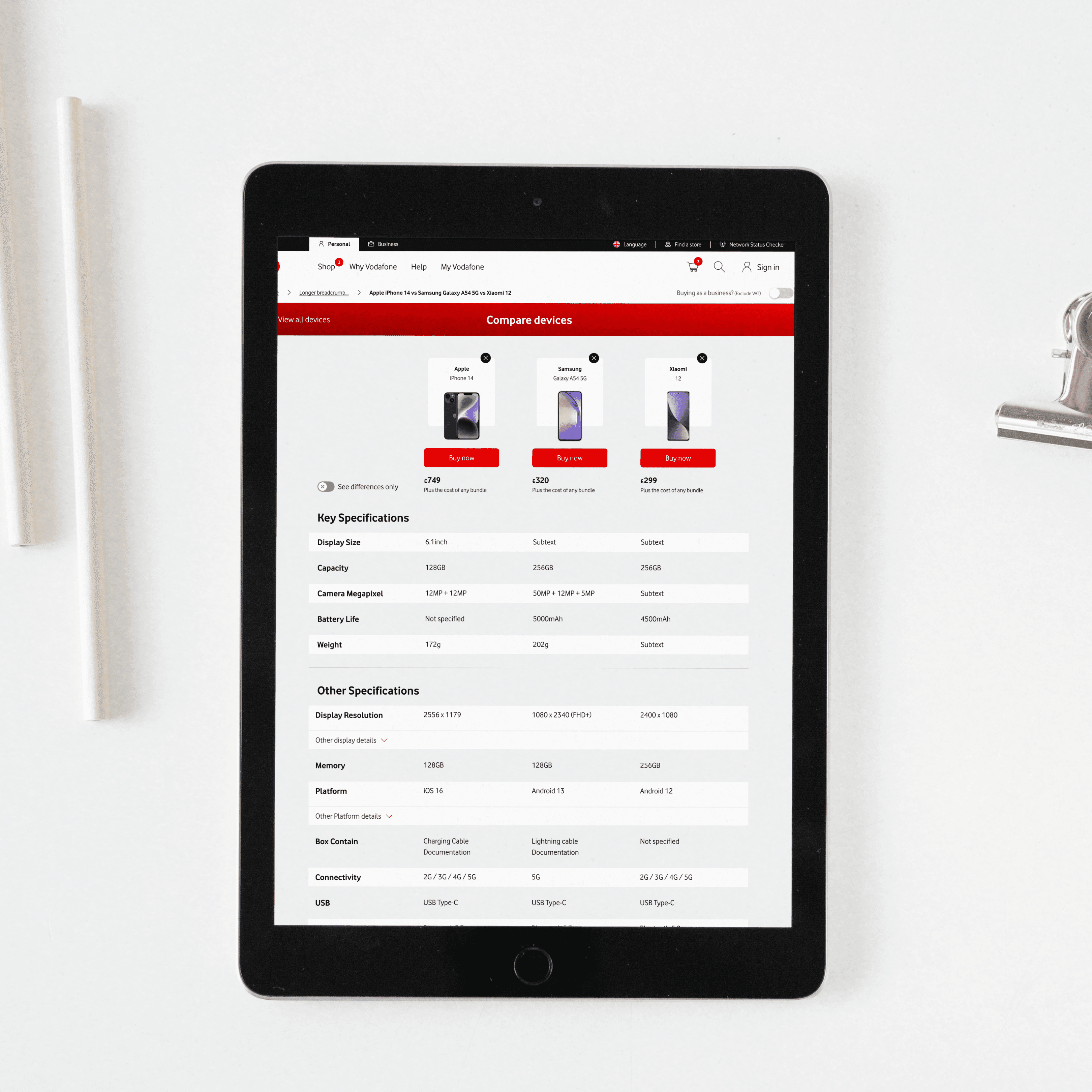
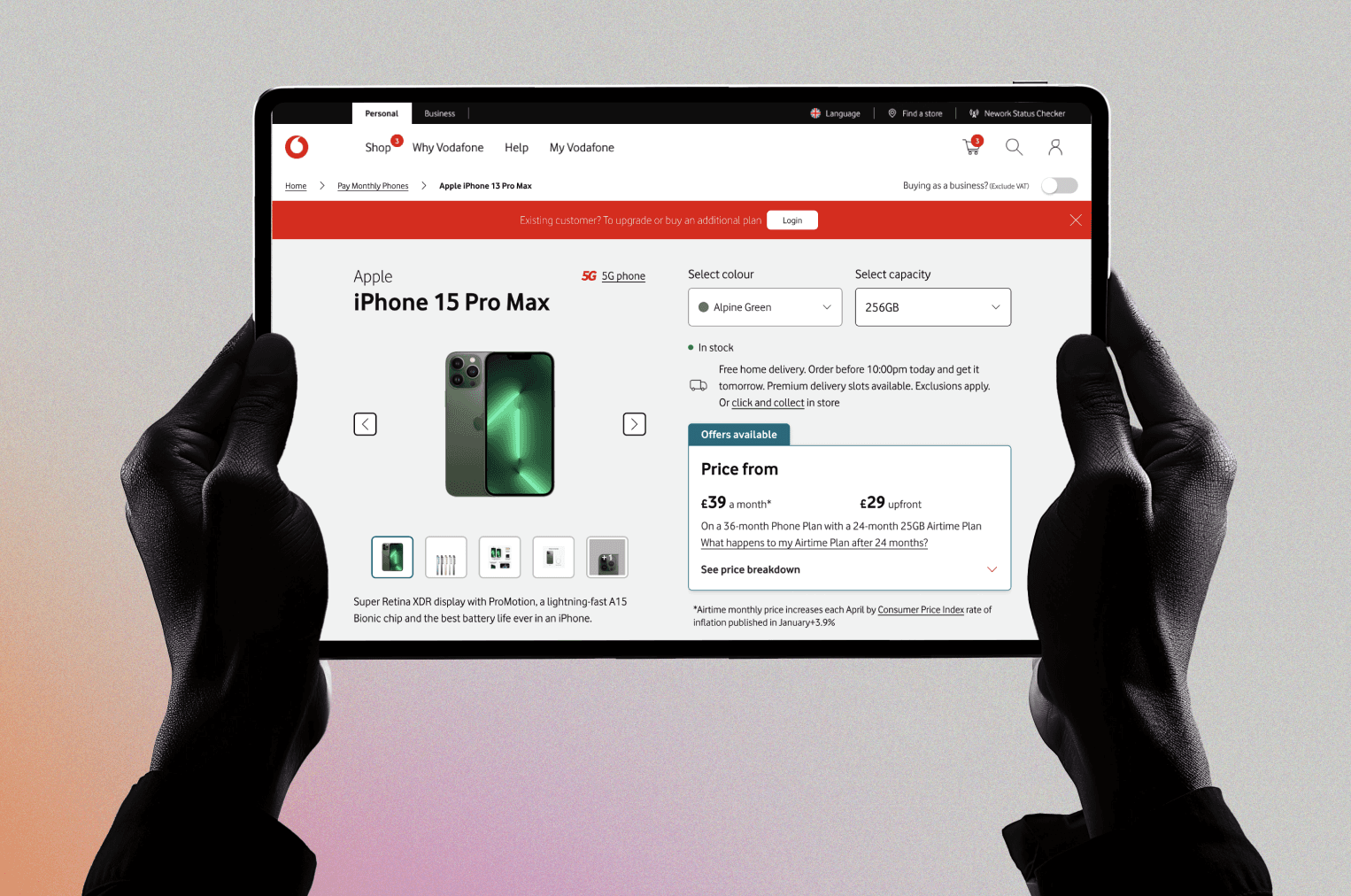
As the lead designer on this project, I saw an opportunity to dramatically improve the PAYM handset journey, which plays a critical role in Vodafone’s e-commerce strategy. I took the initiative to propose a redesign, working collaboratively with Product Managers (PMs) and Product Owners (POs) to secure funding and align on a roadmap that balanced commercial priorities with user needs. This was more than just a design challenge—it required strategic planning, stakeholder alignment, and a user-first approach to tackle the complexities of one of Vodafone’s most high-stakes journeys. My role involved not only solving design problems but also fostering collaboration to ensure the success of the project.
Background/Context:
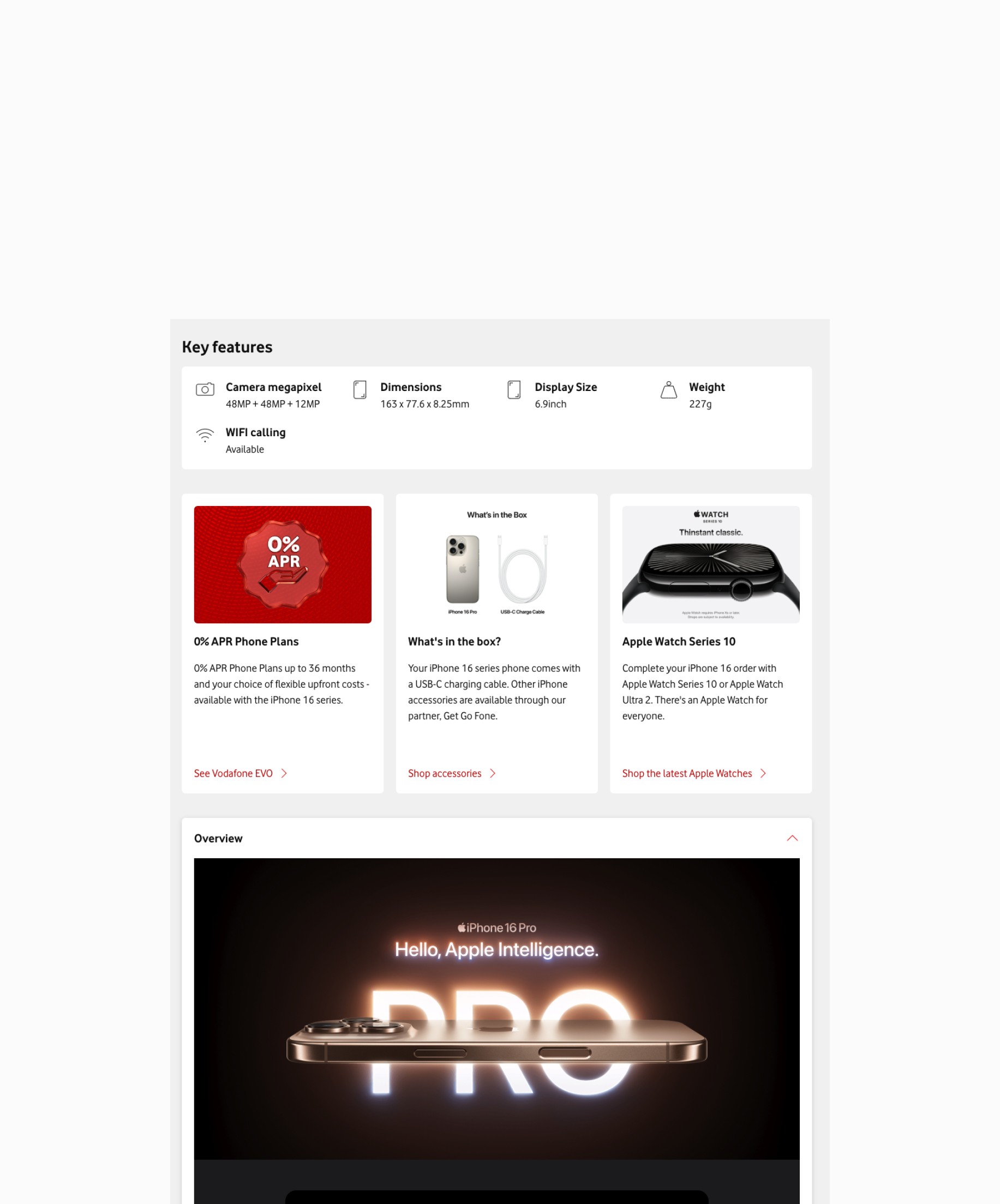
Vodafone is one of the largest telco providers in the world, and the PAYM handset journey is its most commercially valuable pathway on the e-commerce site. It enables customers to purchase handsets and airtime plans while showcasing Vodafone’s flagship EVO proposition—flexible, split contracts that offer a unique value to customers.
This journey directly impacts revenue and customer acquisition, making it a high-priority initiative for the business.
Research and Discovery:
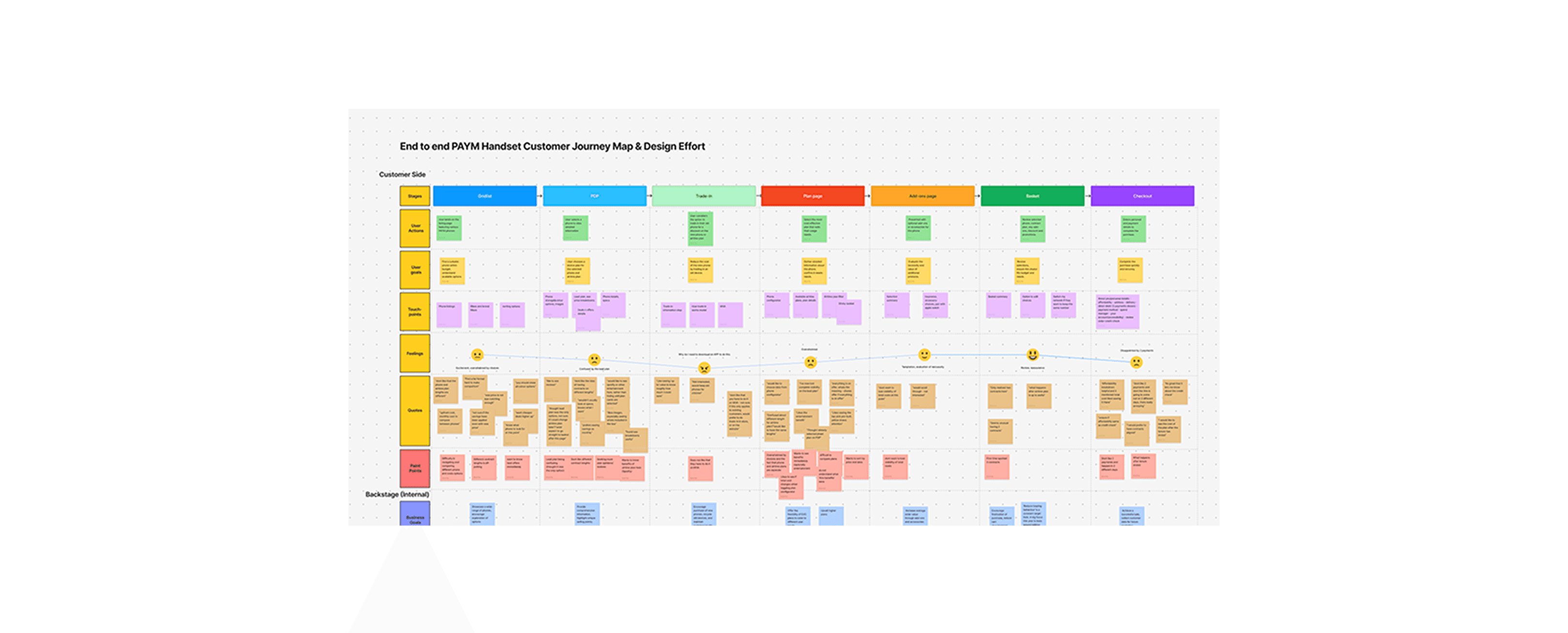
I began by sitting down with the research team to discuss their observations and hypotheses about potential issues in the existing journey. This set the foundation for detailed, unmoderated user testing that allowed us to pinpoint user pain points and validate our assumptions.
Key findings included:
1. Users felt overwhelmed by the number of steps in the journey.
2. Excessive text caused cognitive overload.
3. Choosing an airtime plan was confusing due to too many options.
4. Customers didn’t fully understand the EVO proposition and its unique flexibility.
5. Promotions were not as noticeable as intended.
Problem Statement:
The complexity of the PAYM handset journey, combined with unclear communication of key propositions, left users feeling confused and fatigued, hindering their ability to complete purchases effectively.
Why This Redesign Matters:
This redesign was not only an opportunity to align the journey with Vodafone’s updated design system but also a chance to directly impact critical OKRs by:
Reducing the looping rate (43% → 39.5%).
Lowering PDP (Product Detail Page) exit rate (64% → 62%).
Given its commercial importance, the redesign required a thoughtful balance of design, business needs, and technical feasibility.
Challenges:
Design Complexity
The PAYM handset journey is dense with content, including detailed promotions, offers, and the EVO proposition. Simplifying and clarifying this experience while ensuring all critical information was surfaced in a user-friendly way was a significant challenge.
Stakeholder Priorities
Each stakeholder group had different priorities:
Design System Team: Focused on strict adherence to the new design guidelines.
Product Team: Laser-focused on achieving business OKRs.
Propositions Team: Concerned with ensuring visibility for their offers and messaging.
Legal Team: Insistent on surfacing all necessary terms and conditions.
This misalignment had the potential to create friction, so fostering collaboration and finding common ground was a key part of my role.
Strategic Planning and Prototyping:
To address these challenges, I organized an ideation workshop with 15 key stakeholders. This session gave everyone a voice while driving alignment toward two core concepts and a clear implementation strategy, which not only minimized future roadblocks but also strengthened cross-functional relationships, ensuring that we could move forward as a united team.

UX Solutions:
To address the confusion around split contracts, I proposed two concepts:
Combined Price First:
Display the total phone and airtime price upfront, with configuration options presented in later steps.
Phone Price First:
Show only the phone price initially, followed by step-by-step configuration for phone and airtime plans.
Both concepts underwent user testing to evaluate:
How users perceived the price structure.
Whether promotions were clear and persuasive.
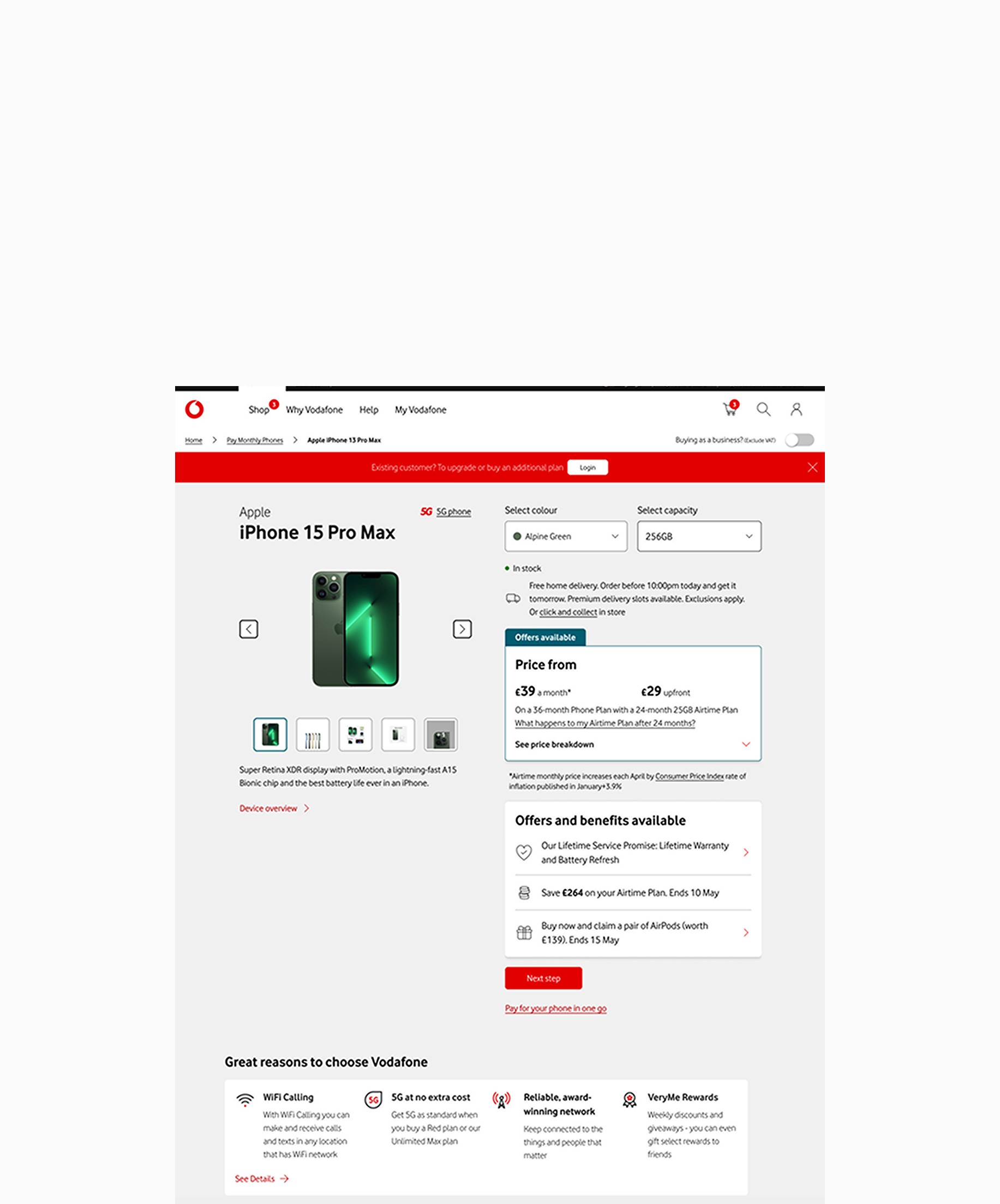
Outcome: The “Combined Price First” concept resonated better with users, improving their comprehension and overall confidence in the journey.
Incremental Implementation Through CRO Testing:
Given the journey’s critical business value, we opted for a phased rollout using CRO testing. Each page redesign was launched incrementally, allowing us to gather quantitative data, refine the designs, and adjust based on user behavior.
This iterative approach ensured that every decision was grounded in real user insights, making the redesign both effective and scalable.
Outcome & Key Metrics:
By Q1 2023, the redesigned PAYM handset journey went live. The results were compelling:
+10.43% PDP-to-checkout progression rate.
+17.25% overall conversion rate.
21% looping rate.
+63% trade-in intention rate.
Additionally, the redesign evolved from a single project into a series of sub-initiatives, enabling us to continuously optimize the journey. Some initiatives exceeded expectations, while others provided learnings for future iterations.
Conclusion:
Leading the PAYM handset redesign was a rewarding experience that tested my ability to think critically, align diverse stakeholder priorities, and solve complex design problems. From proposing the redesign to rolling it out incrementally, I worked to ensure that both user needs and business goals were met.
This project not only improved Vodafone’s most valuable e-commerce journey but also strengthened the role of UX within the organization. It reinforced my belief in the power of collaboration and user-centered design to drive meaningful impact—and inspired me to continue creating seamless, innovative experiences in e-commerce.